IN
IN₹
Apparel & Fashion
Loading subcategories...
View More
Description
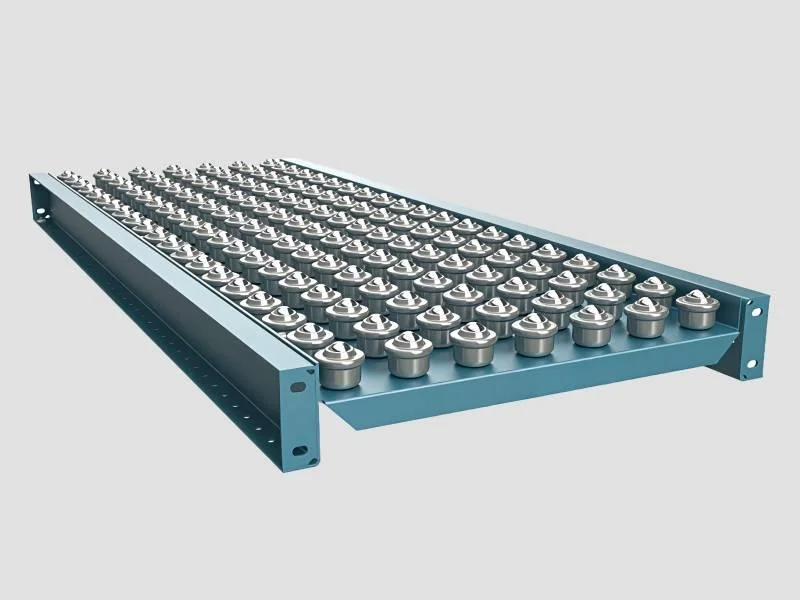
The Ball Transfer Conveyor is a fundamental material handling solution designed for smooth, multi-directional movement of goods with minimal operator effort. It consists of a serie...
The Ball Transfer Conveyor is a fundamental material handling solution designed for smooth, multi-directional movement of goods with minimal operator effort. It consists of a series of high-grade ball casters—available in carbon steel, stainless steel, or nylon—mounted within a rigid frame constructed from mild steel, stainless steel (SS304), or aluminum profiles. This configuration allows cartons, rigid flat-bottom containers, and various industrial items to be effortlessly pushed, rotated, or redirected in any direction. With a load capacity ranging from 30–50 kg per ball and an overall capacity of 100–500 kg/m², it handles lightweight to medium loads reliably. Standard dimensions include lengths from 500–5000 mm, widths from 400–1200 mm, and an adjustable height of 750–900 mm, ensuring it fits diverse operational layouts. The omni-directional capability eliminates the need for lifting and reduces physical strain, making manual transfer operations significantly more efficient and ergonomic.

This conveyor finds essential application across numerous industries where flexible manual handling is required. In warehousing and logistics, it facilitates the manual sorting, inspection, and transfer of cartons between conveyor lines. Manufacturing and assembly plants use it at workstations to position components, rotate products during assembly, or feed items into machinery. The apparel and fashion sector employs these units for moving garment carts, bins of materials, and packaged goods through cutting, sewing, and packing areas. Airports utilize them in baggage handling for manual sorting and direction changes. Furthermore, they are invaluable in printing, packaging, and tool rooms for maneuvering heavy rolls, pallets, and equipment, proving their versatility in any environment demanding reliable, low-friction material movement.

The business value of this ball transfer conveyor lies in its straightforward reliability and direct impact on operational efficiency. By enabling effortless manual movement, it reduces worker fatigue, minimizes the risk of product damage from dragging or dropping, and accelerates material flow through key process points. Its durable construction—featuring powder-coated mild steel, corrosion-resistant SS304, or lightweight aluminum frames with zinc-plated or stainless steel ball housings—ensures long service life with minimal maintenance, even in demanding conditions. The adjustable height and range of ball diameters (25.4 mm to 50.8 mm) and pitches (75–150 mm) allow it to be tailored to specific load requirements and spatial constraints. This unit represents a cost-effective, unpowered solution that enhances workflow flexibility, improves workplace ergonomics, and delivers consistent performance, making it a trusted component in efficient material handling systems.

Key Features:
- Constructed with durable frame options: Mild Steel (Powder Coated), Stainless Steel (SS304), or Aluminium Profile for varied environmental needs.
- Features high-load ball casters available in Carbon Steel, Stainless Steel (SS304), or Nylon materials with diameters from 25.4 mm to 50.8 mm.
- Offers adjustable conveyor height (750–900 mm) and customizable lengths (500–5000 mm) and widths (400–1200 mm) for flexible integration.
- Designed with a ball pitch of 75–150 mm and robust ball housing made of Zinc-Plated Steel or SS304 for smooth, reliable operation.
- Provides substantial load handling with per-ball capacity of 30–50 kg and an overall load capacity of 100–500 kg/m².

Benefits:
- Enables effortless omni-directional movement of cartons and rigid materials, reducing physical strain on operators and improving workplace ergonomics.
- Increases manual handling efficiency by allowing quick sorting, rotating, and transferring of goods without the need for lifting or powered equipment.
- Versatile application across industries including warehousing, manufacturing, apparel, and logistics for manual workflow integration.
- Durable construction ensures long-term reliability and minimal maintenance, even with continuous use in industrial environments.
- Customizable dimensions and material selections allow the conveyor to be tailored to specific spatial layouts and operational load requirements.
Specifications
| Attribute | Value |
|---|---|
| Conveyor LengthConveyor WidthConveyor HeightFrame MaterialBall DiameterBall MaterialPitch Between BallsLoad CapacityOverall Load CapacityBall Housing Material |
| Additional Information | |
|---|---|
| Country of Origin | India |
| Customisable | No |
Application
The ball transfer conveyor excels in environments where goods need to be manually redirected, rotated, or positioned with precision and minimal physical strain. Its low-friction ball surface allows smooth movement in any direction, making it perfect for integrating into existing workflow stations where fixed-direction conveyors are impractical. This flexibility transforms static work areas into dynamic handling points, significantly improving manual material flow without complex automation.

From packaging lines to assembly areas, this unit serves as a reliable bridge between automated sections and manual operations. It is particularly valuable in spaces where floor space is limited, as it requires no power and can be placed exactly where directional change is needed. The robust construction ensures it withstands continuous use in industrial settings, handling consistent loads day after day while maintaining smooth operation and reducing product damage during transfers.
- Manual sorting and inspection stations for cartons, bins, and packaged goods.
- Direction change points between powered conveyor sections in distribution centers.
- Packaging and assembly line workstations for positioning components or finished products.
- Loading docks and staging areas for transferring pallets or heavy containers.
- Tool rooms and workshops for moving machinery parts, molds, and equipment.
Trade Details
| Available Stock | In Stock |
| Sample Availability | No |
Payment Terms
| Payment Terms |
|
Company Profile

Dynamic Conveyors And Automation, Tamil Nadu Tamil Nadu, India
Tamil Nadu, IndiaIndustrial Equipment & Machinery•Manufacturer
Factory Details
Factory SizeBelow 1000 sqm
Industrial Ball Transfer Conveyor For Manual Sorting And Material Handling
Ball Transfer Conveyor enables effortless omni-directional movement of cartons and rigid materials for manual sorting, rotating, and transferring with minimal operator effort. Available in customizable lengths, widths, and material options.
Min. Order Quantity: 1
Shipping
Shipping fee and delivery date to be negotiated. Contact supplier now for more details.
Dynamic Conveyors And Automation
 Tamil Nadu, India
Tamil Nadu, IndiaIndustrial Equipment & MachineryManufacturer