IN
IN₹
Apparel & Fashion
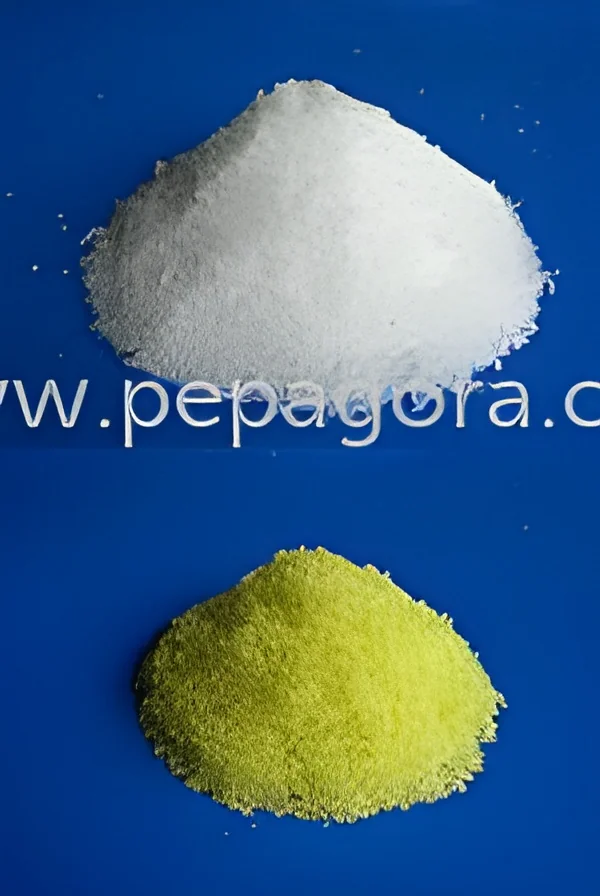
Description
Industrial Aluminium Chloride Catalyst represents a fundamental chemical compound with exceptional catalytic properties and versatile industrial applications. This high-purity aluminium chloride (AlCl3) features unique physical characteristics including a low melting point and distinctive sublimation at 178°C, making it particularly valuable for various chemical processes. The compound's covalent bonding structure differs from more ionic halides, with molten AlCl3 conducting electricity poorly while its solid state exists as a six-coordinate layer lattice adopting the YCl3 structure. Its ability to form dimers (Al2Cl6) that dissociate at higher temperatures into trigonal planar AlCl3 provides chemical manufacturers with a flexible and efficient catalyst for numerous synthetic applications requiring precise control and consistent performance.

The chemical manufacturing industry extensively utilizes aluminium chloride as a primary catalyst for Friedel-Crafts reactions, particularly in t...
Industrial Aluminium Chloride Catalyst represents a fundamental chemical compound with exceptional catalytic properties and versatile industrial applications. This high-purity aluminium chloride (AlCl3) features unique physical characteristics including a low melting point and distinctive sublimation at 178°C, making it particularly valuable for various chemical processes. The compound's covalent bonding structure differs from more ionic halides, with molten AlCl3 conducting electricity poorly while its solid state exists as a six-coordinate layer lattice adopting the YCl3 structure. Its ability to form dimers (Al2Cl6) that dissociate at higher temperatures into trigonal planar AlCl3 provides chemical manufacturers with a flexible and efficient catalyst for numerous synthetic applications requiring precise control and consistent performance.

The chemical manufacturing industry extensively utilizes aluminium chloride as a primary catalyst for Friedel-Crafts reactions, particularly in the production of anthraquinone for the dyestuffs industry from benzene and phosgene. Pharmaceutical companies rely on it for synthesizing active pharmaceutical ingredients and critical intermediates in drug manufacturing processes. Water treatment facilities employ aluminium chloride as an effective coagulant for purifying drinking water and treating industrial wastewater, ensuring compliance with environmental standards. Additional industrial applications include petroleum refining, where it facilitates hydrocarbon processing and improves yield efficiency, and metal production industries that value its metallurgical properties for various extraction and purification processes. The personal care sector also incorporates purified grades into antiperspirant formulations, demonstrating the compound's broad utility across diverse industrial segments.

Businesses choosing our aluminium chloride gain access to a reliably consistent product that ensures process stability and predictable outcomes in manufacturing operations. Our compound delivers exceptional value through its proven performance in critical applications, reducing processing times and improving yield efficiency in chemical synthesis while maintaining consistent quality standards. The material's well-documented properties and behavior under various conditions provide engineers and chemists with a trustworthy reagent that minimizes process variability and ensures reproducible results. We maintain strict quality control measures to guarantee optimal performance across different industrial settings, supporting manufacturing operations that depend on consistent chemical performance for maintaining production schedules and meeting quality specifications in competitive markets.

Key Features:
- High-purity aluminium chloride compound with consistent chemical composition and reliable performance
- Low melting point and unique sublimation characteristics at 178°C for efficient processing
- Covalent bonding structure with distinctive electrical conductivity properties in different states
- Forms dimers (Al2Cl6) that dissociate at higher temperatures into trigonal planar AlCl3
- Adopts YCl3 structure with six-coordinate layer lattice arrangement in solid state

Benefits:
- Ensures consistent catalytic performance in chemical synthesis and manufacturing processes
- Provides reliable coagulation efficiency in water treatment applications for purification
- Supports predictable outcomes and process stability across diverse industrial applications
- Delivers proven performance in critical applications reducing processing time requirements
- Maintains consistent quality standards supporting manufacturing efficiency and reliability
Specifications
| Additional Information | |
|---|---|
| Country of Origin | India |
Application
Aluminium chloride serves as an essential catalyst in Friedel-Crafts reactions, enabling efficient production of dyes, pharmaceuticals, and specialty chemicals. Its unique catalytic properties make it indispensable for alkylation and acylation processes in organic synthesis, offering consistent performance in demanding industrial environments where precise chemical transformations are required for manufacturing operations.
Beyond chemical manufacturing, this compound plays vital roles in water treatment facilities as a highly effective coagulant for purifying drinking water and treating industrial wastewater. It also finds significant applications in petroleum refining processes, metal production industries, and as a key component in antiperspirant formulations. Industries value its versatility and proven effectiveness across multiple sectors where reliable chemical performance ensures operational consistency and quality outcomes.
- Essential catalyst for Friedel-Crafts reactions in dye manufacturing and pharmaceutical production
- Highly effective water treatment coagulant for municipal and industrial purification systems
- Key processing component in petroleum refining and hydrocarbon processing operations
- Critical material in metal production and various metallurgical applications
- Active ingredient in antiperspirant formulations and personal care product manufacturing
Trade Details
| Available Stock | In Stock |
| Sample Availability | No |
Payment Terms
| Payment Terms |
|
Company Profile
Bhatia Acid Pvt Ltd, New Delhi
 New Delhi, India
New Delhi, IndiaRaw Materials & Chemicals•Manufacturer•Importer / Exporter
Factory Details
Factory SizeBelow 1000 sqm
Annual Production Capacity0
Industrial Aluminium Chloride Catalyst For Chemical Synthesis And Water Treatment
Industrial Aluminium Chloride Catalyst delivers high-purity AlCl3 for chemical synthesis and water treatment applications, ensuring reliable performance in pharmaceutical manufacturing and industrial processes with consistent quality.
Min. Order Quantity: 1 unit
Shipping
Shipping fee and delivery date to be negotiated. Contact supplier now for more details.
Bhatia Acid Pvt Ltd
 New Delhi, India
New Delhi, IndiaRaw Materials & ChemicalsManufacturer