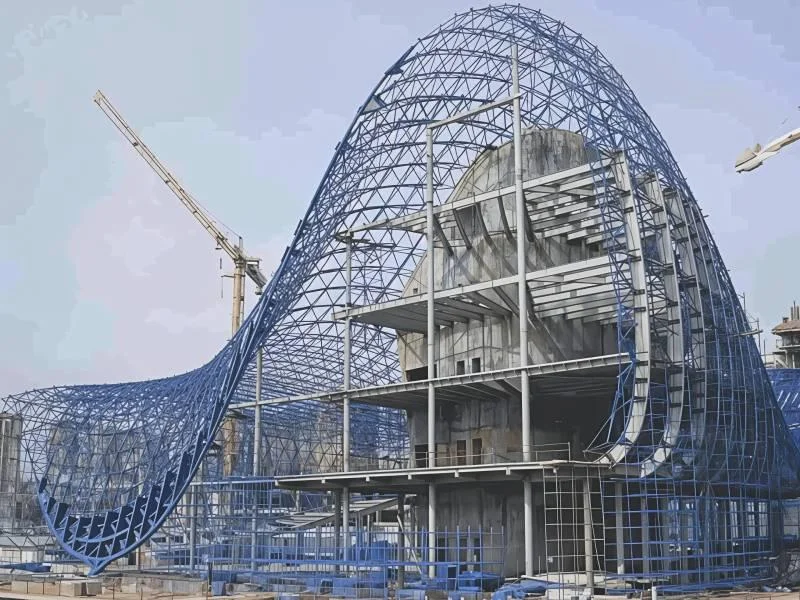
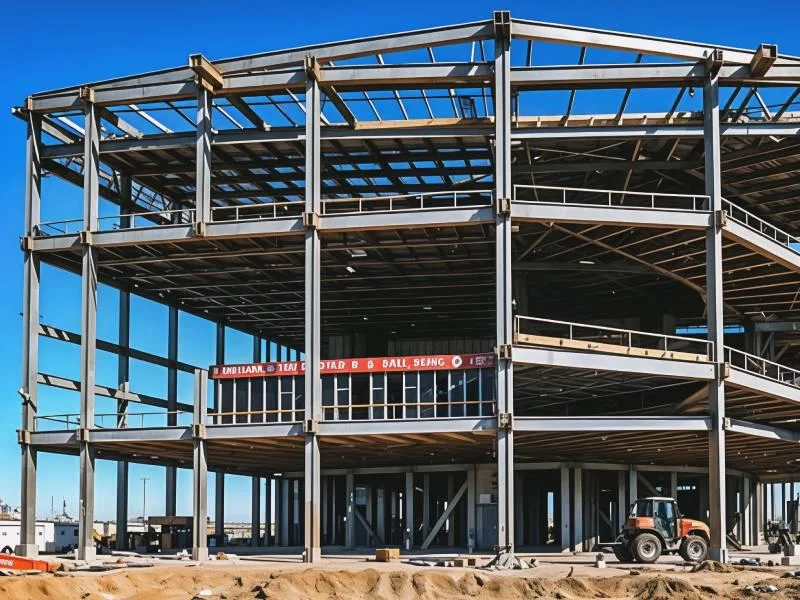
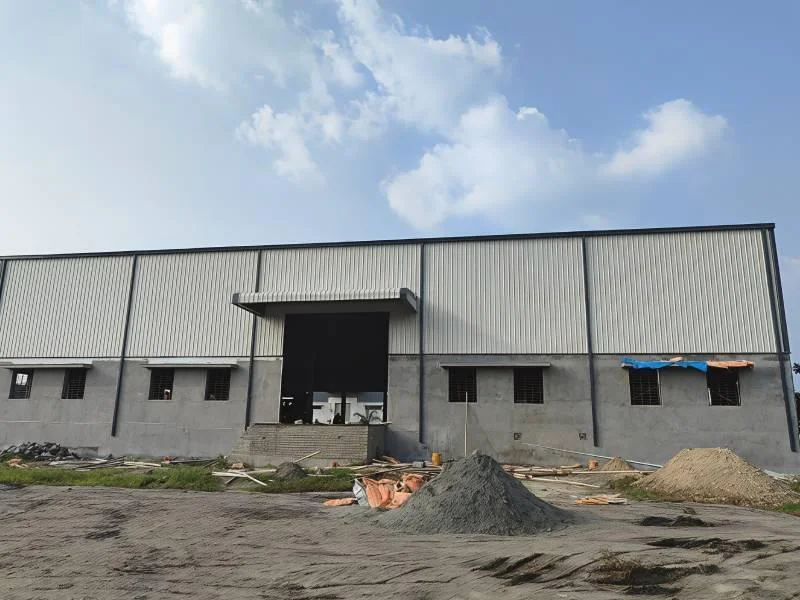
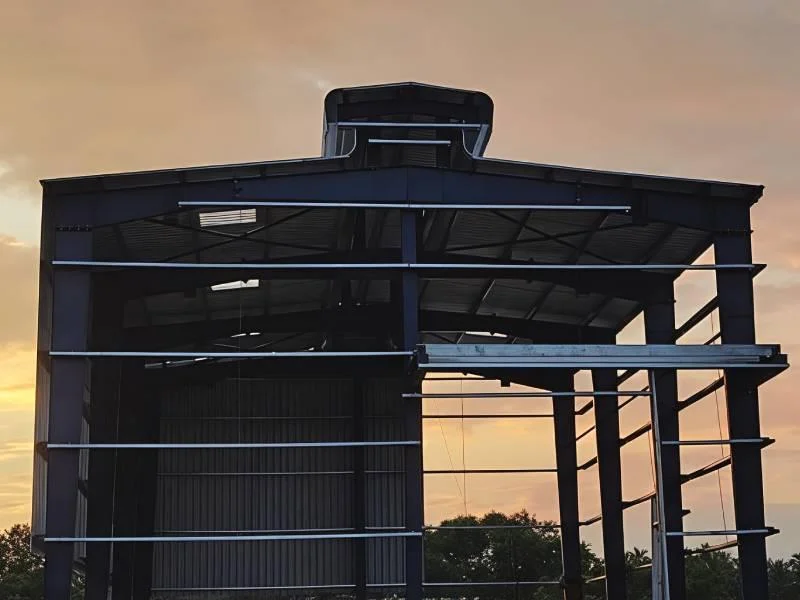
- Manufacturing Industry – Used for factories, production plants, assembly units, workshops, and fabrication facilities.
- Warehousing Industry – Suitable for warehouses, storage centers, distribution facilities, and material handling areas.
- Automotive Industry – Used for vehicle manufacturing units, service centers, workshops, and component storage facilities.
- Logistics Industry – Ideal for logistics hubs, distribution centers, loading facilities, and transportation support structures.
- Agriculture Industry – Suitable for farm storage buildings, equipment sheds, agricultural processing units, and utility structures.
- Commercial & Infrastructure – Used for commercial complexes, institutional facilities, utility buildings, and infrastructure projects.

 IN
IN₹
Apparel & Fashion
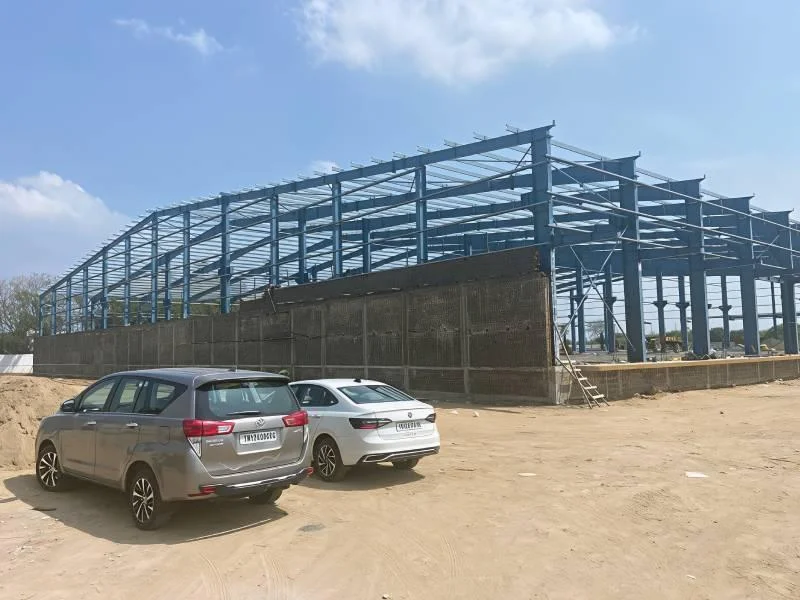
Description
Steel Buildings are engineered structures designed to provide strong, stable, and durable spaces for industrial, commercial, and storage requirements. They are manufactured using quality structural steel that offers high load-bearing capacity and dependable performance under demanding conditions. These buildings can be customized in different sizes, layouts, roof profiles, and configurations according to specific project needs. Their modular construction supports faster installation while helping reduce construction time and labor requirements. The flexible structural design provides efficient space utilization and large open areas for machinery, storage, production, and material movement. With proper protective coating, professional installation, and regular maintenance, Steel Buildings provide long-lasting performance and a cost-effective solution for modern construction projects.
Specifications
| Additional Information | |
|---|---|
| SKU | 1 |
| Country of Origin | India |
Application
Trade Details
| Production Lead Time | 4-7 Days |
| Available Stock | In Stock |
| Production Capacity | 1 sets/ weekly |
| Sample Availability | No |
Payment Terms
| Payment Terms |
|
| Payment Methods |
|
Shipping & Logistics
| Shipping Internationally | No | |
| Methods |
| |
| IncoTerms |
| |
| Dispatch Lead time | Ships in 7 Days |
Company Profile

MRK Roofing, Tamil Nadu
 Tamil Nadu, India
Tamil Nadu, India32 yrs
Manufacturer
Turn Over
₹25 Lakhs – ₹1 Crore
Factory Details
Factory SizeBelow 1000 sqm
Frequently Asked Questions
1
What is steel building structure fabrication?
Steel building structure fabrication refers to the process of creating steel structures, which can include everything from frames for buildings to supports and other architectural features. The process involves cutting, shaping, and assembling steel components according to specific specifications.
2
What types of projects can utilize your steel building structures?
Our steel building structures can be used in a variety of projects including commercial buildings, industrial facilities, warehouses, agricultural buildings, and residential homes. They are versatile enough to meet different construction needs.
3
Can I customize my steel building design?
Yes! We offer customization options for our steel building structures based on customer specifications. You can work with our team to create designs that meet your particular requirements.
4
How long does it take to fabricate a steel building structure?
The time required for fabrication can vary depending on the complexity and size of the structure as well as current workload. Generally speaking, it may take several weeks from design approval to completion. For more precise timelines, please contact us directly.
5
Are Steel Buildings quick to construct?
Yes, modular and prefabricated steel components can help simplify assembly and reduce overall construction time.
SKU: 1
Steel Building Structure Fabrication
Steel Building Structure Fabrication provides engineered steel frameworks with 350-500 MPa beam strength, 20-80 ton column capacity, and anti-corrosion coatings for durable industrial construction and commercial facilities.
Min. Order Quantity: 1 set
Shipping
Shipping fee and delivery date to be negotiated. Contact supplier now for more details.
Shipping InternationallyNo
Estimated Delivery11 - 14 business days
MRK Roofing Tamil Nadu, India
Tamil Nadu, IndiaManufacturer