IN
INundefined
Apparel & Fashion
Loading subcategories...
View More
Description
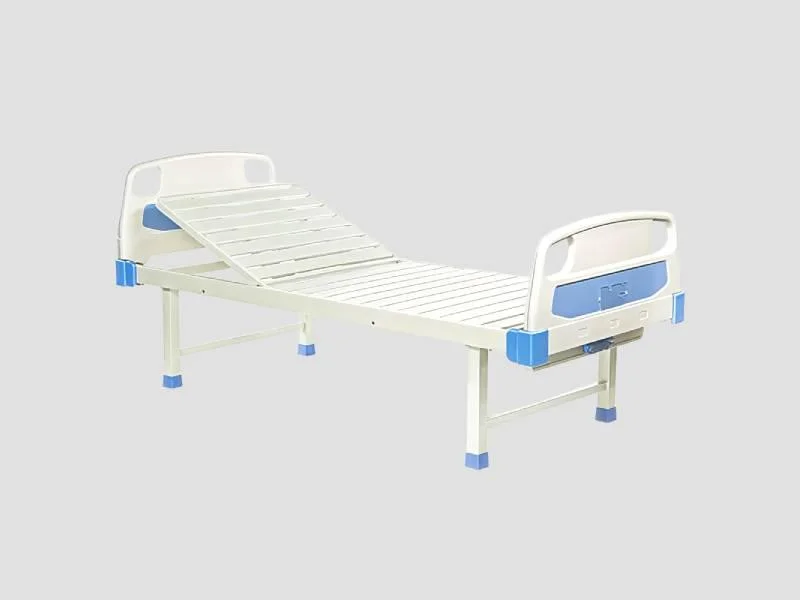
The Full Fowler Cot represents a significant advancement in patient care furniture, designed as a fully adjustable hospital bed that prioritizes both therapeutic support and patien...
The Full Fowler Cot represents a significant advancement in patient care furniture, designed as a fully adjustable hospital bed that prioritizes both therapeutic support and patient dignity. Its core function lies in the independent mechanical adjustment of the headrest and footrest sections, each capable of elevating from a flat position to a near-vertical angle of 60° to 90°. This precise adjustability transforms a standard resting surface into a dynamic support system, enabling patients to assume comfortable sitting or semi-sitting postures. This capability is not merely about comfort; it is a clinically relevant feature that addresses fundamental needs such as improved respiration, easier digestion, enhanced circulation, and greater engagement in daily activities. The bed's robust construction and reliable adjustment mechanisms ensure it meets the rigorous demands of continuous use, providing a stable and secure environment for patients requiring extended bed rest or specific positional therapy.

This specialized cot is indispensable across a wide spectrum of healthcare and residential care industries. In hospital settings, including ICUs, general wards, and post-operative recovery units, it is used for patients recovering from surgery, managing cardiac or pulmonary conditions, or those with limited mobility. Nursing homes and long-term care facilities utilize it extensively to improve the quality of life for residents, aiding in everything from meal times and personal care to pressure sore prevention. Rehabilitation centers employ the Full Fowler Cot to support patients undergoing physical therapy, allowing for gradual positional changes. Furthermore, its application extends into home healthcare, providing a hospital-grade solution for families caring for elderly relatives or individuals with chronic illnesses, thereby bridging the gap between institutional and home-based care with professional-grade equipment.

The business value of the Full Fowler Cot is rooted in its reliability, suitability for critical care environments, and its direct impact on improving patient outcomes. For healthcare providers and facility managers, investing in this equipment translates into enhanced operational efficiency through easier patient handling, reduced risk of caregiver injury, and the potential for shorter recovery times due to improved patient positioning. Its durability and focused design mean lower long-term maintenance costs and consistent performance. The cot's differentiator is its dedicated full Fowler functionality—offering high-angle sitting support that many standard adjustable beds cannot achieve—making it the specific tool for specific clinical needs. This reliability builds trust with medical professionals who require equipment that performs predictably under pressure, ensuring patient safety and comfort while streamlining care delivery workflows.

Key Features:
- Fully adjustable design with independent control of both headrest and footrest sections.
- Headrest elevation range of approximately 60° to 90°, achieving a near-vertical sitting position.
- Footrest elevation adjustable up to a near-vertical position for comprehensive leg and lower body support.
- Engineered to support sitting and semi-sitting patient postures securely and comfortably.
- Robust construction built for durability and reliable operation in demanding healthcare environments.

Benefits:
- Improves patient respiratory comfort and lung function by facilitating optimal sitting positions.
- Enhances overall patient comfort and care quality during eating, reading, and daily recovery activities.
- Supports caregivers by making patient positioning easier and more efficient, reducing physical strain.
- Aids in clinical management of conditions requiring elevated positioning, such as post-operative recovery.
- Contributes to preventive care by helping improve circulation and reduce the risk of pressure-related complications.
Specifications
| Attribute | Value |
|---|---|
| ProductTypeAdjustabilityHeadrest Elevation RangeFootrest ElevationPatient Position SupportedTypical Use |
| Additional Information | |
|---|---|
| Country of Origin | India |
| Customisable | No |
Application
The Full Fowler Cot is engineered for clinical environments where precise patient positioning is critical for both treatment and comfort. Its independent head and foot section adjustment allows caregivers to create optimal postures for respiratory support, feeding, therapeutic activities, and pressure relief, making it a versatile solution for diverse patient needs across acute and long-term care settings.

This adjustable bed finds essential use in managing conditions that benefit from elevated positioning. From post-operative recovery requiring reduced lung congestion to long-term care scenarios aimed at preventing complications like bedsores, the cot's reliable adjustability supports daily patient routines, improves caregiver accessibility, and contributes directly to enhanced patient outcomes and quality of life.
- Managing respiratory conditions by elevating patients to a sitting or semi-sitting position to ease breathing and improve lung expansion.
- Supporting post-operative recovery in hospital wards, allowing comfortable positioning that aids in pain management and reduces complications.
- Enhancing daily care routines in nursing homes, including safe feeding, reading, and social interaction for bedridden residents.
- Providing therapeutic positioning for long-term patients to improve circulation, prevent pressure ulcers, and maintain muscle tone.
- Facilitating home-based care for individuals with mobility challenges, enabling comfortable resting and seated positions for daily activities.
Trade Details
| Available Stock | In stock |
| Sample Availability | No |
Payment Terms
| Payment Terms |
|
Company Profile

Medify Surgicals, Tamil Nadu Tamil Nadu, India
Tamil Nadu, IndiaHealth & Personal Care•Distributor / Wholesaler
Factory Details
Factory SizeBelow 1000 sqm
Full Fowler Adjustable Hospital Bed with Independent Head & Foot Elevation
The Full Fowler Cot is a fully adjustable hospital bed with independent headrest and footrest elevation from 60° to 90°, supporting sitting and semi-sitting positions for enhanced patient comfort, recovery, and care.
Min. Order Quantity: 1
Shipping
Shipping fee and delivery date to be negotiated. Contact supplier now for more details.
Medify Surgicals
 Tamil Nadu, India
Tamil Nadu, IndiaHealth & Personal CareDistributor / Wholesaler