IN
IN₹
Apparel & Fashion
Description
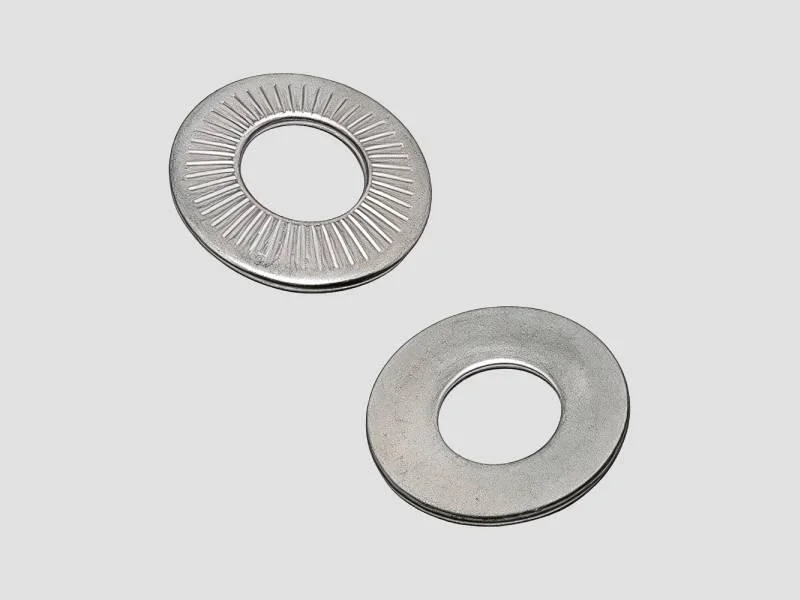
The disc washer is a fundamental yet critical component in mechanical engineering, designed to solve the common problem of bolted joint loosening. Unlike a flat washer that merely distributes load, a disc washer's conical shape acts as a compact spring. When compressed during tightening, it stores energy and applies a continuous, elastic force against the bolt head or nut. This spring force actively counters the effects of vibration, thermal cycling, and material creep, which can cause standard fasteners to lose clamp load over time. Available in types like conical, serrated, flat, and slotted, and in materials ranging from standard spring steel to high-performance Inconel, these washers offer a reliable, maintenance-free solution for ensuring joint integrity where failure is not an option.

Industries that operate under stress, both literal and environmental, rely heavily on disc washers. In aerospace and automotive manufacturing, they are specified for engine mounts, landing gear, an...
The disc washer is a fundamental yet critical component in mechanical engineering, designed to solve the common problem of bolted joint loosening. Unlike a flat washer that merely distributes load, a disc washer's conical shape acts as a compact spring. When compressed during tightening, it stores energy and applies a continuous, elastic force against the bolt head or nut. This spring force actively counters the effects of vibration, thermal cycling, and material creep, which can cause standard fasteners to lose clamp load over time. Available in types like conical, serrated, flat, and slotted, and in materials ranging from standard spring steel to high-performance Inconel, these washers offer a reliable, maintenance-free solution for ensuring joint integrity where failure is not an option.

Industries that operate under stress, both literal and environmental, rely heavily on disc washers. In aerospace and automotive manufacturing, they are specified for engine mounts, landing gear, and chassis components to endure constant vibration and shock loads. The power generation sector uses them in turbine assemblies and generator connections to manage thermal expansion. Within oil and gas, they are vital for flange connections on pipelines and offshore rigs, resisting corrosion and pressure fluctuations. Heavy machinery, railway systems, and wind energy installations all incorporate disc washers into their bolting strategies to guarantee long-term structural stability and operational safety, making them a universal standard for critical fastening.

For businesses, investing in high-quality disc washers translates directly into reduced downtime, lower maintenance costs, and enhanced safety compliance. A reliable washer prevents catastrophic joint failure, which can lead to expensive repairs, production halts, and safety incidents. The variety of materials and finishes—such as stainless steel for corrosion resistance or phosphor bronze for non-sparking properties—allows for precise selection to match specific operational environments and regulatory standards. This component, though small, plays an outsized role in the longevity and reliability of capital equipment, protecting your machinery and your bottom line by ensuring assemblies stay securely fastened as designed.

Key Features:
- Conical spring design providing consistent elastic tension and vibration damping.
- Available in multiple types: Conical, Serrated, Flat, and Slotted for different locking needs.
- Constructed from high-strength materials including Spring Steel, Stainless Steel (AISI 304/316), Carbon Steel, Inconel, and Phosphor Bronze.
- Various surface finishes like Zinc Plated, Black Oxide, Phosphate Coated, and Passivated for enhanced corrosion resistance.
- Wide dimensional range with Outer Diameter from 6 mm to 200 mm and Inner Diameter from 3 mm to 100 mm to fit standard and custom bolts.

Benefits:
- Maintains constant bolt preload and clamping force, preventing loosening from vibration or thermal cycles.
- Compensates for material relaxation and settlement, ensuring long-term joint integrity without retightening.
- High tensile strength (1100–1300 MPa) and temperature resistance (up to 300°C for Stainless Steel) for demanding applications.
- Compact design provides significant spring force in a small space, ideal for tight assemblies.
- Reduces maintenance needs and prevents equipment failure, enhancing operational safety and reliability.
Specifications
| Key Attributes | |
|---|---|
| Type | Conical, Serrated, Flat, or Slotted Type, Stainless Steel (AISI 304 / AISI 316), Carbon Steel, Inconel, Phosphor Bronze, Zinc Plated, Phosphate Coated, Passivated, Plain |
| Material | Spring Steel, Black Oxide, 6 mm – 200 mm |
| Surface Finish | 3 mm – 100 mm |
| Outer Diameter (OD) | Up to 300°C (for Stainless Steel) / 200°C (for Carbon Steel) |
| Inner Diameter (ID) | 1100 – 1300 MPa |
| Additional Information | |
|---|---|
| Country of Origin | India |
Application
Disc washers, also known as Belleville or conical spring washers, are engineered components designed to maintain bolt tension in demanding environments. Their unique conical shape provides a spring-like action that compensates for thermal expansion, vibration, and material relaxation, preventing joint failure. This makes them superior to standard flat washers for applications where consistent clamping force is non-negotiable.
These washers are indispensable across heavy industries due to their durability and load-bearing capacity. They are manufactured from high-strength materials like spring steel, stainless steel (AISI 304/316), and carbon steel, with surface treatments such as zinc plating, black oxide, and passivation for corrosion resistance. This material versatility ensures suitability for everything from standard machinery to extreme conditions in chemical processing or offshore platforms.
- Securing critical bolted joints in aerospace frames and automotive engine assemblies to prevent loosening from vibration.
- Maintaining constant pressure on electrical contacts and busbars in switchgear and power distribution systems.
- Absorbing load fluctuations and thermal cycling in pipelines, pressure vessels, and valve assemblies within the oil and gas sector.
- Ensuring reliable tension in wind turbine tower flanges and railway track fastenings exposed to dynamic stresses.
- Providing spring action in industrial clutches, brakes, and heavy machinery where consistent force is required for safety and performance.
Trade Details
| Available Stock | In Stock |
| Sample Availability | No |
Payment Terms
| Payment Terms |
|
Company Profile

Chennai Enterprises, Tamil Nadu
 Tamil Nadu, India
Tamil Nadu, India16 yrs
Manufacturer•Retailer
Turn Over
₹25 Lakhs – ₹1 Crore
Factory Details
Factory SizeBelow 1000 sqm
Industrial Disc Washer (Belleville Washer) Spring Steel, Stainless Steel, Carbon Steel
Disc Washer (Belleville Washer) is a conical spring washer providing reliable tension and vibration resistance in bolted joints. Available in spring steel, stainless steel, and carbon steel with various finishes for industrial applications.
Min. Order Quantity: 1
Shipping
Shipping fee and delivery date to be negotiated. Contact supplier now for more details.
Chennai Enterprises Tamil Nadu, India
Tamil Nadu, IndiaManufacturer