
 IN
INundefined
Description
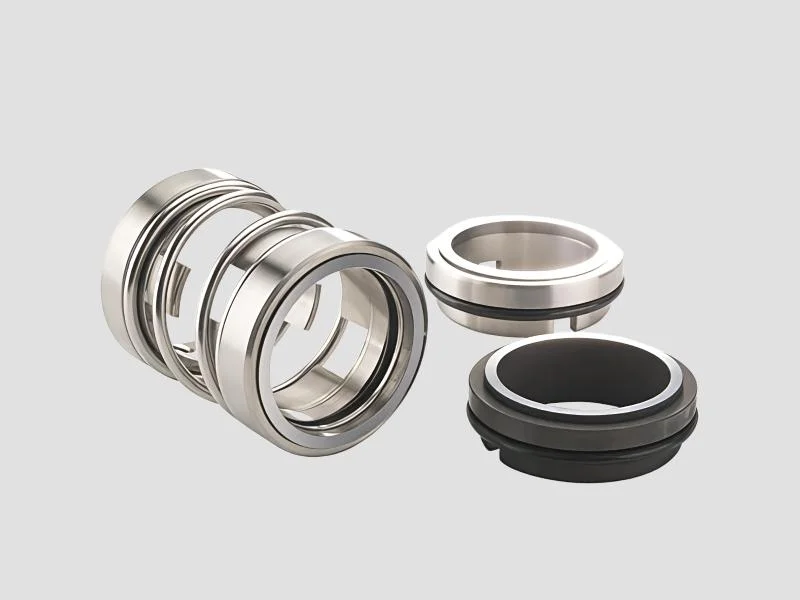
Mechanical seals represent precision-engineered sealing solutions designed specifically for rotating equipment shafts in industrial applications. These devices create a reliable ba...
Mechanical seals represent precision-engineered sealing solutions designed specifically for rotating equipment shafts in industrial applications. These devices create a reliable barrier between rotating and stationary components, preventing fluid leakage while maintaining system pressure and operational efficiency. Constructed from wear-resistant materials including carbon, ceramic, silicon carbide, and tungsten carbide paired with chemical-compatible elastomers like NBR, EPDM, Viton, or PTFE, mechanical seals deliver exceptional durability under demanding conditions. Their fundamental working principle involves maintaining precise face-to-face contact between rotating and stationary rings, supported by spring mechanisms that ensure consistent sealing pressure regardless of operational variations. This engineering approach results in near-zero leakage performance that significantly outperforms traditional packing methods while reducing maintenance frequency and operational downtime.

Across industrial sectors, mechanical seals serve critical functions in numerous applications. In chemical processing plants, they contain aggressive solvents and corrosive fluids in pumps and reactors, preventing hazardous leaks and environmental contamination. Water treatment facilities rely on these seals for centrifugal pumps in ETP and STP systems, ensuring clean operation without fluid loss. The food and pharmaceutical industries utilize specially designed mechanical seals for hygienic applications where product purity is paramount. Mining operations depend on robust seals for slurry pumps handling abrasive mixtures, while oil and gas facilities employ them in transfer pumps and processing equipment. Additional applications include paper manufacturing, sugar processing, general industrial pumping systems, and any scenario requiring reliable shaft sealing under pressure and rotational speed.

The business value of mechanical seals extends beyond basic functionality to deliver measurable operational advantages. Their reliability translates directly to reduced maintenance costs, as they require less frequent replacement than traditional packing and minimize unscheduled downtime. By preventing fluid leakage, they protect expensive equipment components like bearings and shafts from contamination damage, extending overall equipment lifespan. Their clean operation eliminates messy drips and spills, improving workplace safety and reducing cleanup requirements. The availability of various configurations including single spring, multi-spring, cartridge, and split seal designs ensures proper fitment for specific equipment types and operational parameters. This combination of durability, performance, and versatility makes mechanical seals a cost-effective investment for maintaining continuous plant operations and maximizing equipment productivity.

Key Features:
- Precision-engineered shaft sealing for pumps and rotating equipment
- Constructed with wear-resistant materials including carbon, ceramic, SiC, or TC
- Available in single spring, multi-spring, cartridge, and split seal configurations
- Compatible elastomers including NBR, EPDM, Viton, and PTFE for chemical resistance
- Designed for centrifugal pumps, slurry pumps, chemical pumps, and gear pumps

Benefits:
- Prevents fluid leakage under pressure and rotational speed conditions
- Reduces maintenance frequency compared to traditional packing methods
- Extends equipment lifespan by protecting bearings and shafts from contamination
- Ensures clean, drip-free operation for improved workplace safety
- Supports continuous 24/7 operation with reliable long-term performance
Specifications
| productDetailPage.specification.attribute | productDetailPage.specification.value |
|---|---|
| CategorySeal TypeApplicationSuitable EquipmentRotary Ring MaterialMetal Parts MOC |
| Additional Information | |
|---|---|
| Country of Origin | India |
| Customisable | No |
Application
Mechanical seals provide essential leak-proof sealing for rotating shafts in centrifugal pumps, slurry pumps, chemical pumps, mono block pumps, and gear pumps. They maintain system integrity by preventing fluid escape under operational pressure and speed, which is critical for efficient equipment performance and safety compliance across various industrial settings. This reliable sealing solution replaces traditional packing methods to deliver cleaner operation with minimal maintenance requirements.

These seals are engineered for demanding applications in mixers, agitators, reactors, and compressors where precise sealing is non-negotiable. The combination of durable materials like carbon, silicon carbide, or tungsten carbide with chemical-resistant elastomers ensures compatibility with diverse fluids from water to aggressive chemicals. Their design accommodates different configurations including single spring, multi-spring, cartridge, and split seal types to match specific equipment requirements and operational conditions.
- Centrifugal pump shaft sealing in water treatment plants and industrial water systems
- Chemical processing equipment handling corrosive fluids and solvents
- Slurry pumps in mining and mineral processing operations
- Food, dairy, and pharmaceutical processing equipment requiring hygienic sealing
- Oil and gas transfer pumps in refineries and petrochemical facilities
Trade Details
| Available Stock | In stock |
| Sample Availability | No |
Payment Terms
| Payment Terms |
|
Company Profile

PC Pumps & Systems, Tamil Nadu Tamil Nadu, India
Tamil Nadu, IndiaIndustrial Equipment & Machinery•Manufacturer
Factory Details
Factory SizeBelow 1000 sqm
Industrial Mechanical Seal For Pumps And Rotating Equipment Carbon/SiC
Mechanical Seal is a precision shaft sealing device for pumps and rotating equipment, preventing leakage under pressure and speed. Built with hard-faced carbon/ceramic/SiC parts and elastomers, it ensures reliable, low-maintenance, long-life operation.
Min. Order Quantity: 1
Shipping
Shipping fee and delivery date to be negotiated. Contact supplier now for more details.
PC Pumps & Systems
 Tamil Nadu, India
Tamil Nadu, IndiaIndustrial Equipment & MachineryManufacturer