
 IN
INundefined
Description
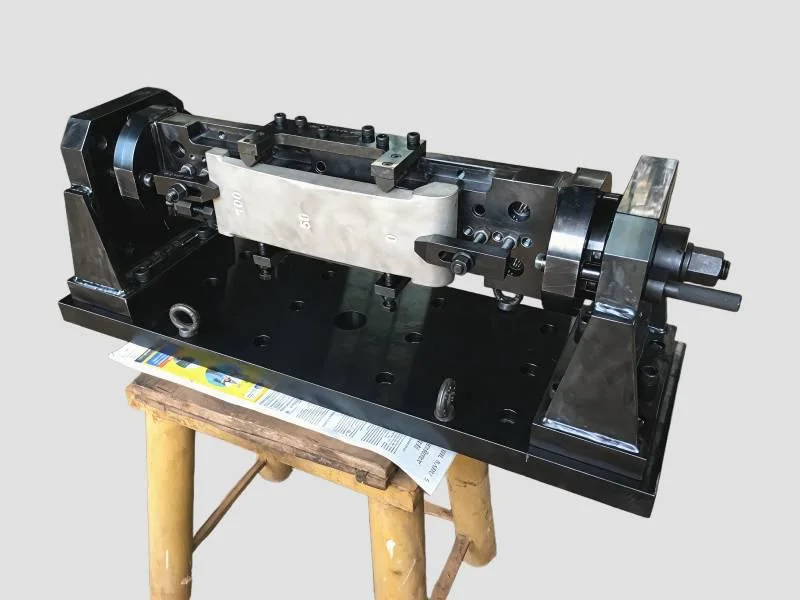
Precision indexing fixtures represent advanced workholding solutions engineered to transform manufacturing efficiency and accuracy across multiple industries. These specialized fix...
Precision indexing fixtures represent advanced workholding solutions engineered to transform manufacturing efficiency and accuracy across multiple industries. These specialized fixtures enable secure positioning of workpieces at predetermined angles for complex machining operations without requiring multiple setups. By facilitating precise rotational positioning, they allow milling, drilling, turning, and grinding operations on multiple faces of a component in a single clamping sequence. This innovative approach eliminates cumulative errors that typically occur when repositioning parts between operations, ensuring exceptional dimensional consistency throughout production batches. Available in manual, hydraulic, or CNC-controlled operation modes, these fixtures seamlessly adapt to various production environments from small workshops to fully automated manufacturing cells. The robust construction using high-grade alloy steel or cast iron provides the necessary rigidity to withstand heavy cutting forces while maintaining positioning accuracy during extended production runs.

These precision fixtures find extensive application across industries where angular machining accuracy is essential for product performance and quality. In the automotive sector, they are indispensable for manufacturing transmission components, engine blocks, and steering mechanisms that require precise angular features and relationships. Aerospace manufacturers rely on indexing fixtures for producing turbine blades, structural components, and landing gear parts that demand strict adherence to engineering specifications and tolerances. The industrial machinery sector utilizes these fixtures for creating complex gears, shafts, and hydraulic components with accurate angular positioning requirements. Defense contractors employ them for manufacturing optical systems, weapon components, and guidance mechanisms where precision indexing directly impacts functionality and reliability. Even in general fabrication and tool rooms, these fixtures prove invaluable for prototyping and small-batch production of components with complex angular requirements, making them versatile assets across the manufacturing spectrum.

The business value of implementing precision indexing fixtures extends significantly beyond their initial investment, delivering substantial returns through enhanced manufacturing capabilities and operational efficiency. These fixtures dramatically reduce setup times by eliminating the need for multiple workpiece handlings between operations, directly translating to increased machine utilization and higher production throughput. The ±0.01 mm positioning accuracy ensures consistent part quality across all production batches, substantially reducing scrap rates and minimizing the need for secondary operations or rework. This exceptional level of precision directly contributes to improved product reliability, performance consistency, and ultimate customer satisfaction. The availability of customizable designs means manufacturers can optimize fixtures for specific component geometries and production requirements, further enhancing operational efficiency and process optimization. Manufactured with global quality standards, these fixtures offer exceptional reliability and long-term durability, ensuring uninterrupted production performance even in the most demanding manufacturing environments.

Key Features:
- Multiple indexing position options including 4, 6, 8, 12 positions or fully customizable configurations
- Three distinct operation modes: manual control, hydraulic operation, or CNC-controlled automation
- High-strength construction utilizing premium materials: high-grade alloy steel or cast iron
- Precision engineering delivering ±0.01 mm positioning accuracy for dimensional stability
- Customizable fixture designs tailored to specific component requirements and processes

Benefits:
- Significant reduction in setup times through elimination of multiple workpiece repositioning
- Enhanced production efficiency with increased machine utilization and higher throughput
- Consistent part quality with reduced scrap rates and minimized rework requirements
- Improved product reliability and performance through precise angular positioning
- Long-term operational reliability with durable construction and minimal maintenance needs
Specifications
| productDetailPage.specification.attribute | productDetailPage.specification.value |
|---|---|
| Product Type | Indexing Fixtures |
| Material | High-Grade Alloy Steel / Cast Iron |
| Operation Mode | Manual / Hydraulic / CNC Controlled |
| Indexing Positions | 4, 6, 8, 12, or Customizable |
| Clamping Force | 5 kN – 50 kN |
| Accuracy | ±0.01 mm |
| Surface Finish | Powder Coated / Rust Resistant |
| Application | Milling, Drilling, Turning, Grinding |
| Fixture Design | Customized as per Component Requirement |
| Manufactured In | India |
| Additional Information | |
|---|---|
| Country of Origin | India |
| Customisable | No |
Application
Precision indexing fixtures revolutionize manufacturing efficiency by enabling multi-angle machining operations in a single setup. These robust workholding solutions eliminate the need for frequent repositioning, significantly reducing setup times and minimizing human error. Available in 4, 6, 8, 12, or customizable indexing positions, they accommodate diverse production requirements from prototyping to high-volume manufacturing while maintaining exceptional accuracy and stability throughout extended production runs.

Manufactured from high-grade alloy steel or cast iron with clamping forces ranging from 5 kN to 50 kN, these fixtures provide superior vibration damping during heavy machining operations. The ±0.01 mm positioning accuracy ensures consistent part quality across production batches, while powder-coated or rust-resistant surface finishes guarantee durability in demanding workshop environments. Custom designs are available to meet specific component requirements and machining processes.
- Automotive manufacturing: Multi-angle machining of engine blocks, transmission housings, and steering components requiring precise angular features
- Aerospace industry: Production of turbine blades, structural components, and landing gear parts with strict tolerance requirements
- Industrial machinery: Manufacturing of complex gears, shafts, and hydraulic components needing accurate angular relationships
- Defense sector: Precision machining of optical systems, weapon components, and guidance mechanisms where indexing accuracy is critical
- Tool and die shops: Prototyping and production of molds, jigs, and fixtures with complex angular features and geometries
Trade Details
| Available Stock | In stock |
| Sample Availability | No |
Payment Terms
| Payment Terms |
|
Company Profile
Millennium Machine Works, Tamil Nadu
 Tamil Nadu, India
Tamil Nadu, IndiaConstruction
Factory Details
Factory SizeBelow 1000 sqm
Annual Production Capacity0
Precision Indexing Fixtures Manual Hydraulic CNC High Accuracy Multi Position
Precision indexing fixtures deliver high-accuracy multi-position machining with manual, hydraulic, or CNC operation modes. Ideal for milling, drilling, turning, and grinding applications across automotive, aerospace, and industrial machinery sectors.
Min. Order Quantity: 1 units
Shipping
Shipping fee and delivery date to be negotiated. Contact supplier now for more details.
Millennium Machine Works Tamil Nadu, India
Tamil Nadu, IndiaConstruction